
CVC Words vs. Sight Words: What’s the Difference?
When teaching children to read, two foundational tools come into play: CVC words and sight words. While both are essential for building literacy, they serve different purposes and require unique teaching approaches. In this guide, we’ll break down what makes these word types distinct, why they’re important, and how to teach them effectively with engaging activities.

What Are CVC Words?
CVC words are three-letter words that follow a consonant-vowel-consonant pattern, such as cat, dog, or bat. They are typically the first step in phonics-based learning because they are easy for young readers to decode. CVC words emphasize letter-sound relationships, helping children understand how sounds combine to form words.
Characteristics of CVC Words:
Short and phonetic, making them easy to sound out.
Rely on simple vowel and consonant sounds.
Great for early phonics practice and decoding skills.
Why Are CVC Words Important?
CVC words are the cornerstone of early reading. By practicing these words, children gain confidence in decoding and blending sounds, skills critical for tackling more complex words later on.
"Systematic phonics instruction improves children’s ability to decode words by over 74%, according to the National Reading Panel." Starting with CVC words ensures a strong literacy foundation.
What Are Sight Words?
Sight words are high-frequency words children are encouraged to memorize by sight, without decoding. Examples include the, you, and an. They are often irregular in spelling, making phonetic decoding difficult.
Characteristics of Sight Words
Frequently appear in beginner texts.
Often don’t follow standard phonics rules (e.g., said, was).
Support reading fluency by reducing the need for constant decoding.
Why Are Sight Words Important?
Sight words make up a significant portion of beginner-level texts, accounting for 50-75% of the words young readers encounter. By memorizing these words, children can focus on decoding more complex or unfamiliar terms, which builds fluency and confidence.
"Mastering sight words allows children to read more smoothly and with better comprehension,"according to research on early literacy education. Highlighting words like high-frequency words and reading tips for kids in your teaching strategy is vital for reading success.
Enhance Learning with Fun Activities
The Early Learning Kids Activity Bundle includes various engaging worksheets and games to help children master both CVC and Sight words. Designed to make phonics practice both fun and effective, these activities are perfect for reinforcing key literacy skills. Click Here to Learn More!
Key Differences Between CVC Words and Sight Words
| Feature | CVC Words | Sight Words |
|---|---|---|
| Structure | Follow a consonant-vowel-consonant pattern. | Can have varied spellings, often irregular. |
| Learning Strategy | Decoded using phonics. | Memorized through repetition. |
| Purpose | Teach phonics and decoding skills. | Improve reading fluency and comprehension. |
| Examples | cat, dog, bat | the, you, an |
Both CVC words and sight words play crucial roles in early reading, and a balanced approach to teaching them is key to developing fluent readers.
Games and Activities for Teaching CVC Words
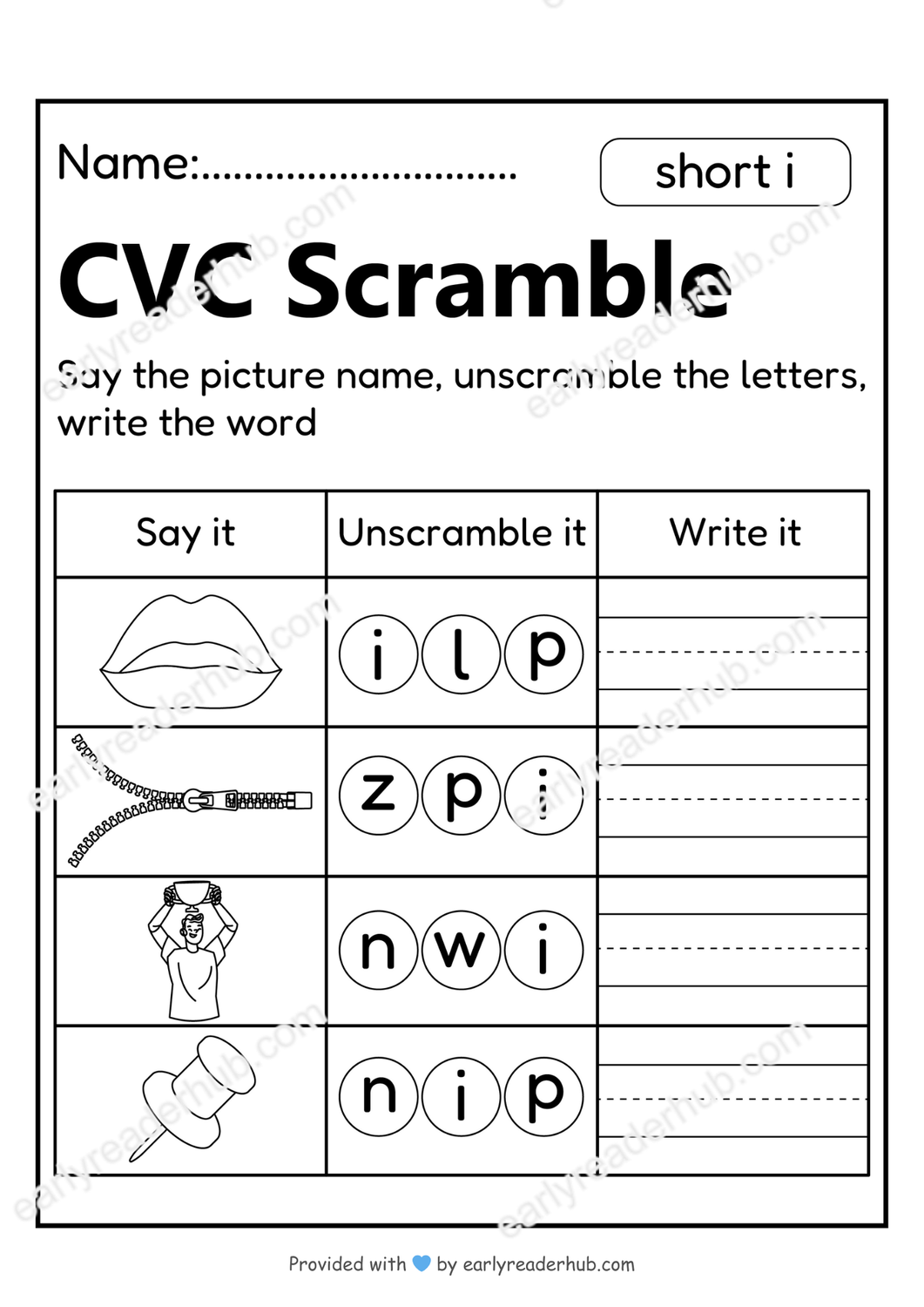
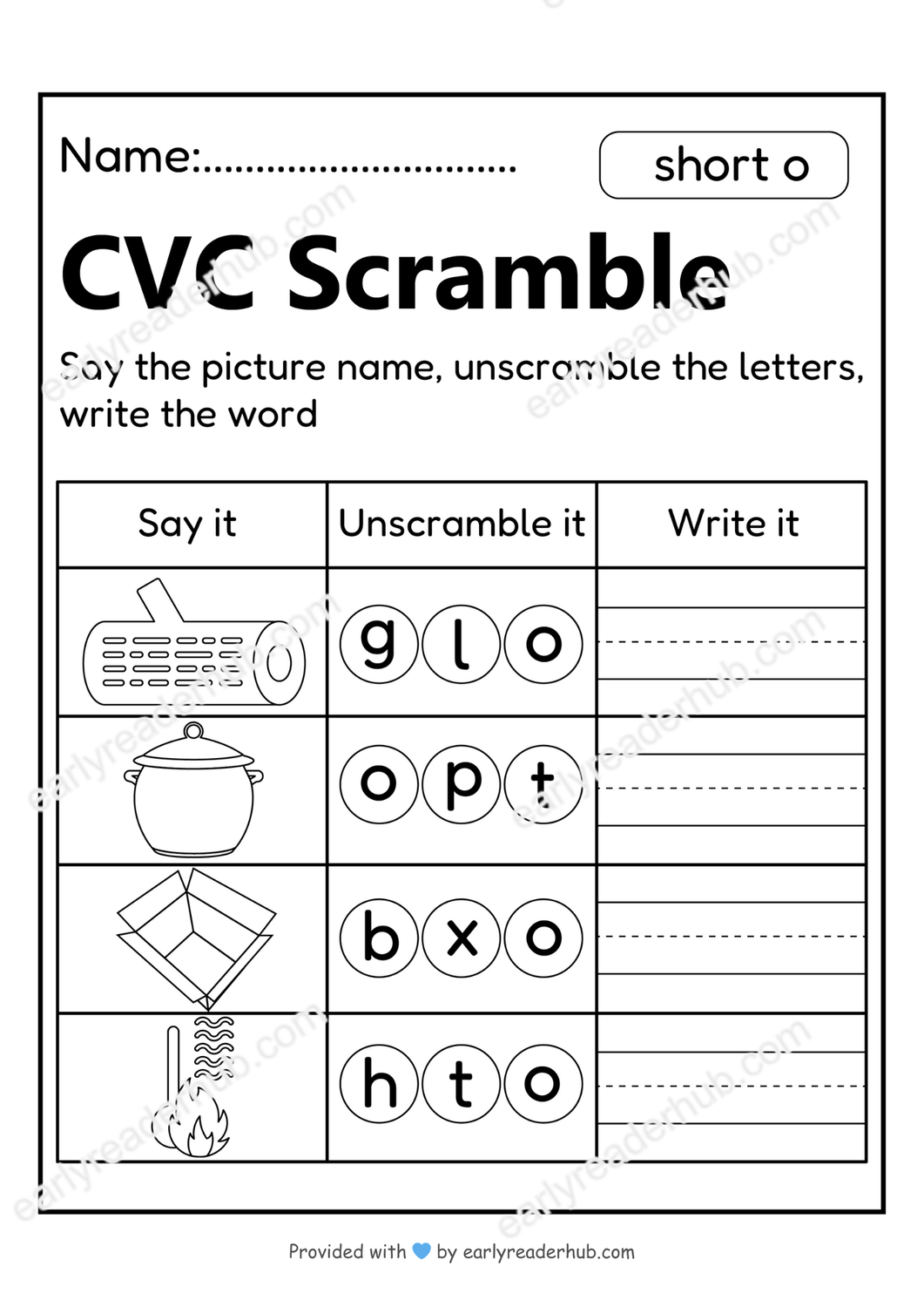
Engaging activities make cvc word practice enjoyable and effective. Printable worksheets are available for download. Simply right-click and save the image to use in your lessons! Here are two examples:
1. Unscramble the CVC Words
Provide scrambled letters (e.g., tac for cat) and ask children to rearrange them. This strengthens decoding and problem-solving skills.
The following printable worksheet demonstrates this activity with fun illustrations and spaces to unscramble CVC words.
2. Tap, Blend, and Read
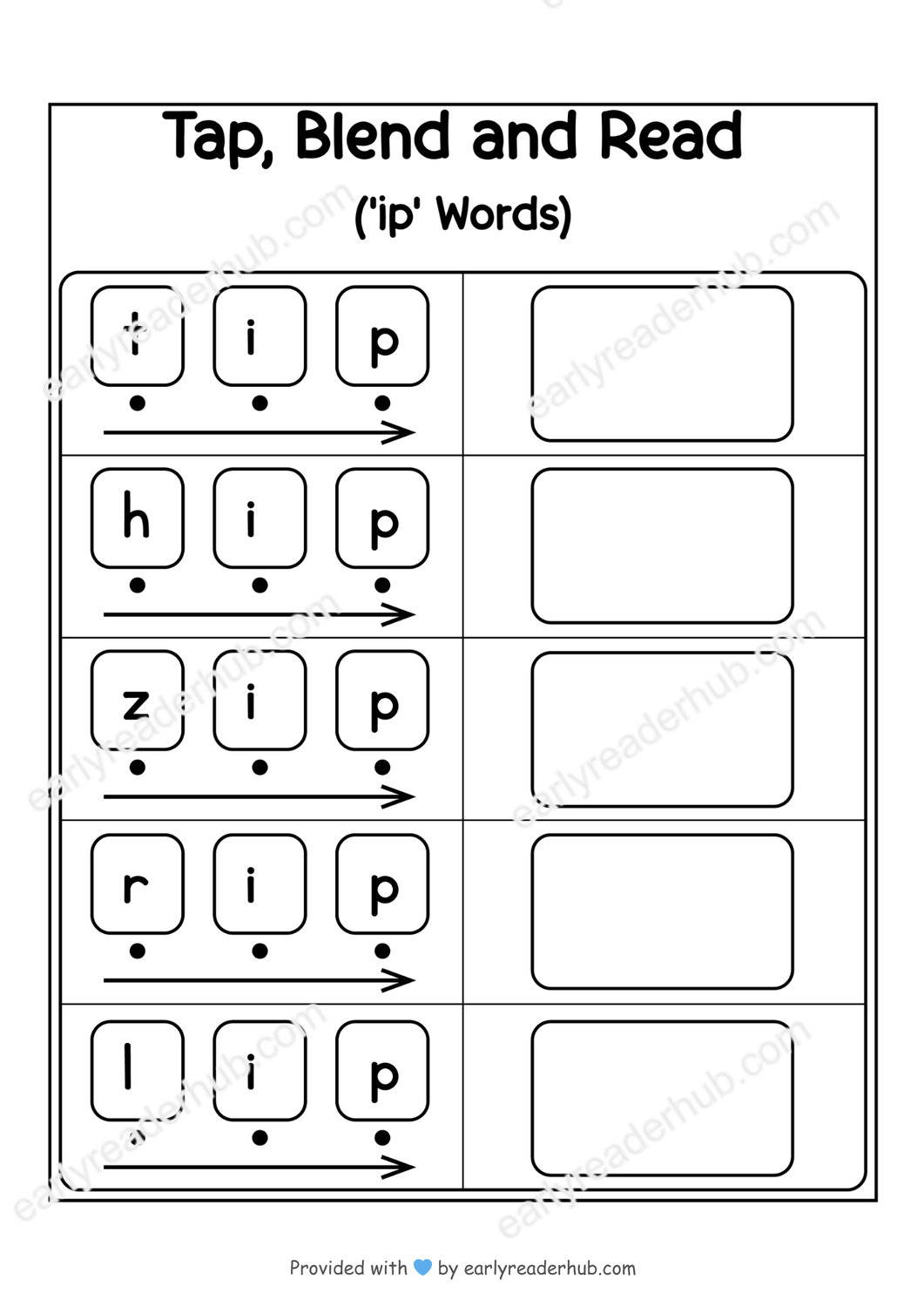
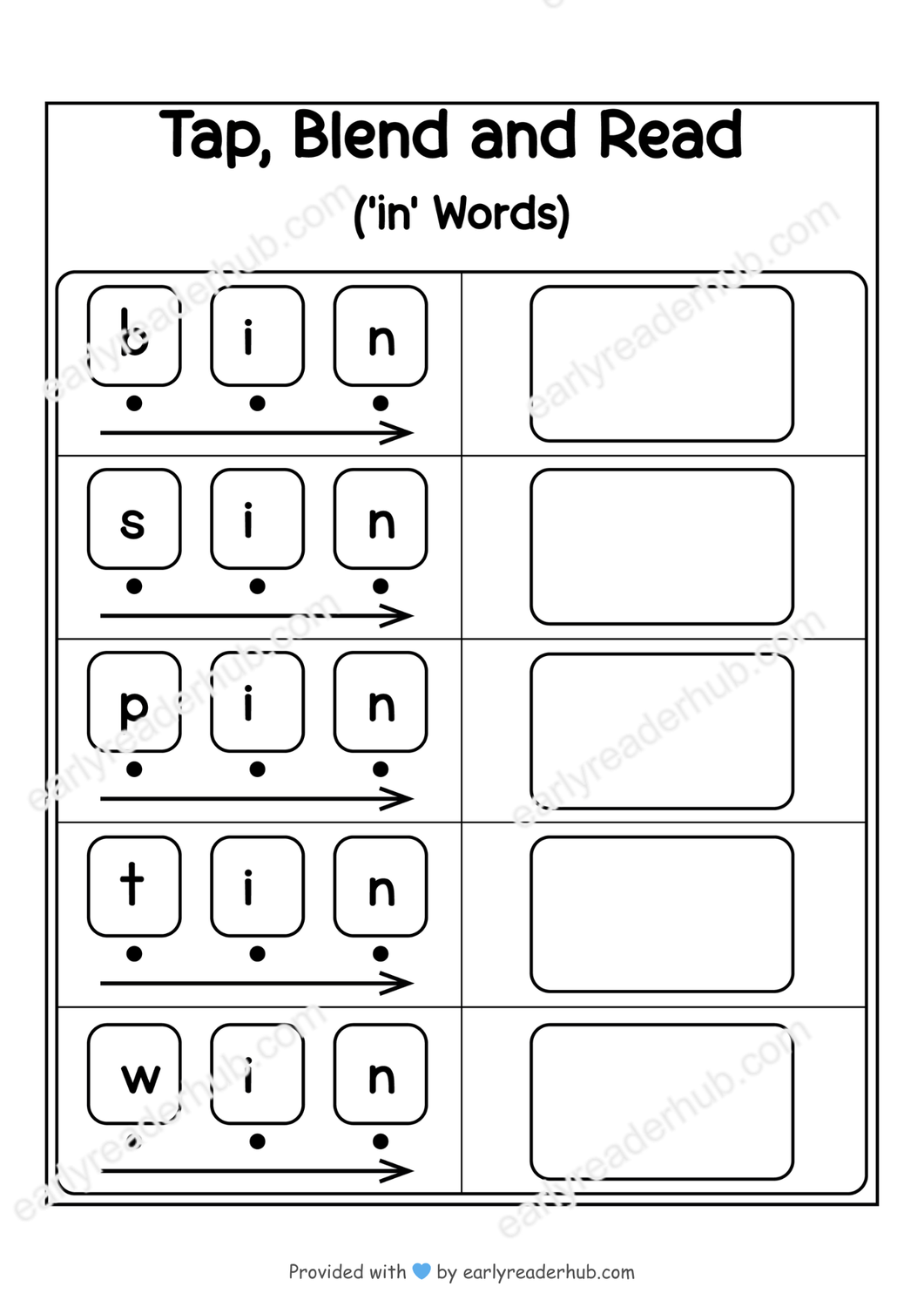
Using flashcards or letter tiles, have children tap each letter sound (e.g., /c/, /a/, /t/), blend them, and read the word aloud.
The following worksheets gives children a chance to practice tapping and blending CVC words through simple visuals.
Games and Activities for Teaching Sight Words
Teaching Sight words can also be exciting and hands-on. Here are two effective games:
1. Sight Word Match-Up
Write different sight words on flashcards and create a matching game. Children can pair matching cards while practicing word recognition.
Example: Use words like "you" and "an" in your matching game.
2. Sight Word Bingo
Sight Word Bingo is a fun, interactive game that engages children while helping them recognize and memorize high-frequency words. To play, Create bingo cards with common sight words like an or you. Call out words for your child to find, combining learning with an engaging game.
Free Sight Word Printables
Below are worksheets featuring the sight words an and you. Feel free to download them and use them as you like. Simply right-click on the images and select "Save as" to save them to your device.
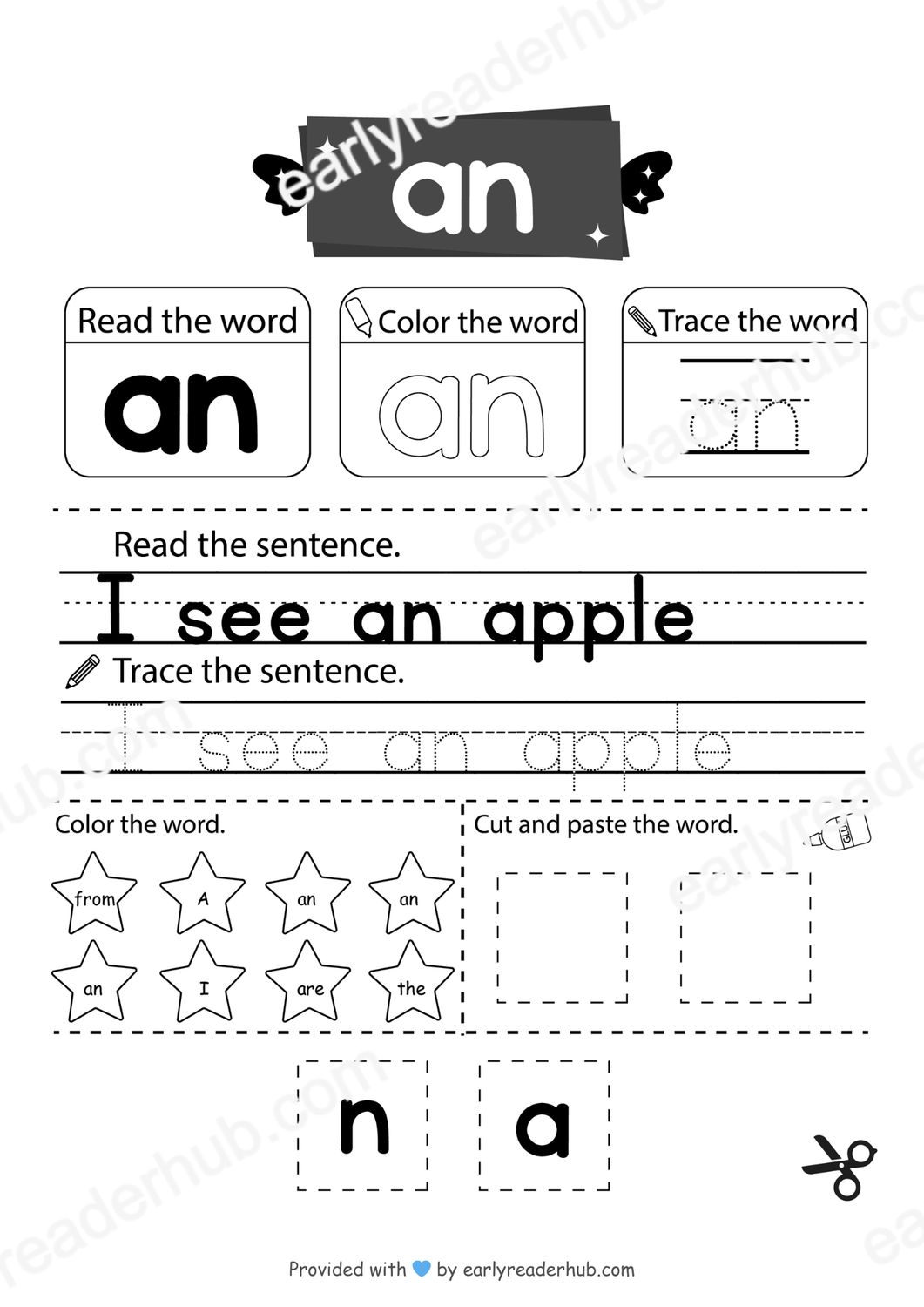
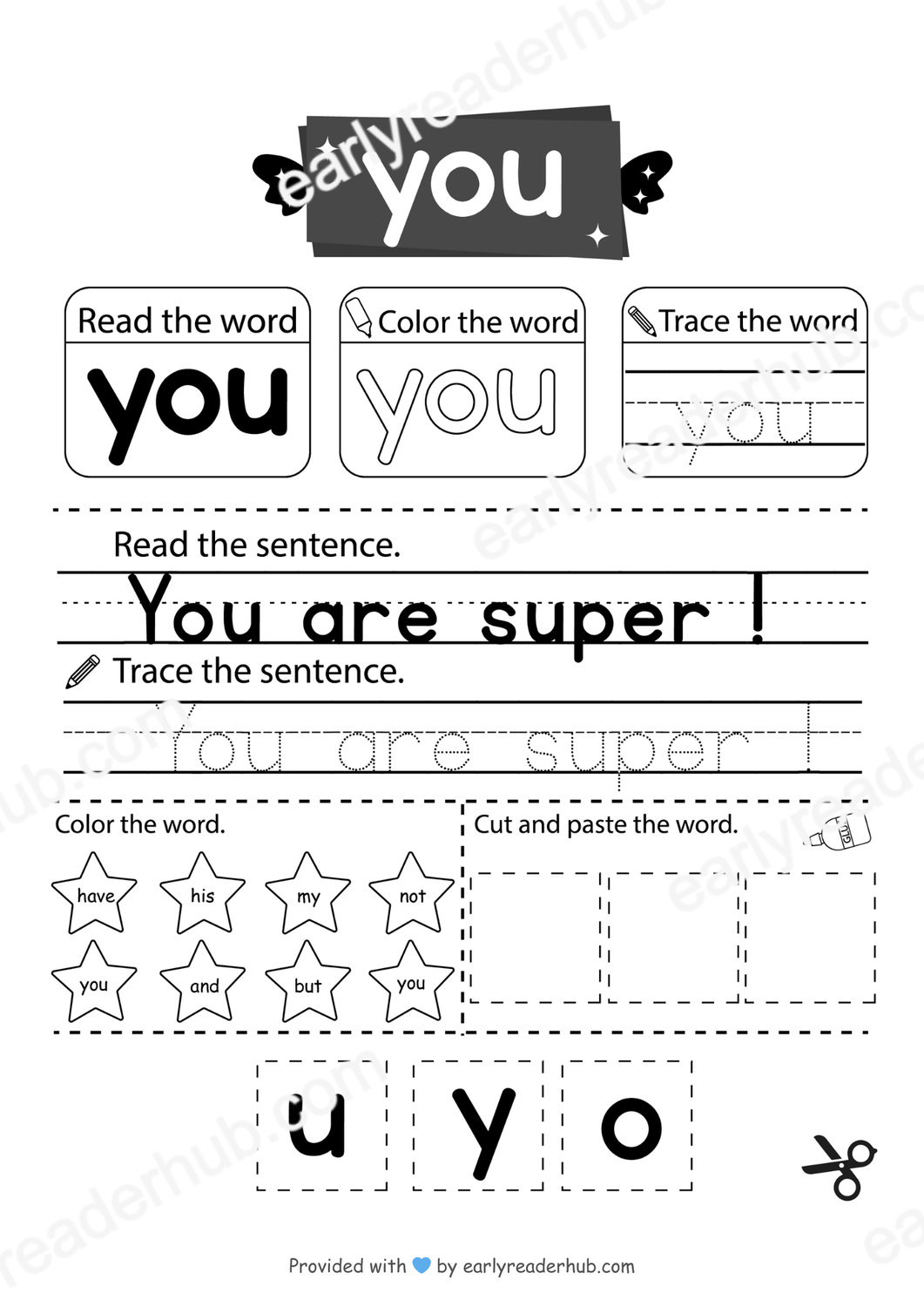
Discover More!
Unlock a world of engaging activities for CVC words and sight words with the Early Learning Kids Activity Bundle. Packed with expertly designed worksheets, games, and hands-on activities, this bundle is perfect for building your child’s reading confidence while keeping them excited about learning.
Whether you're introducing CVC decoding skills or mastering high-frequency sight words, this resource ensures every lesson is both fun and effective. Start your literacy journey today and see your child thrive!
When to Introduce Sight Words vs. CVC Words
1. Start with CVC Words:
Begin teaching CVC words when children recognize the alphabet and show an interest in letter sounds. Typically, this occurs around the ages of 4–6 during preschool or kindergarten. Phonics-based instruction using CVC words enables children to develop decoding skills, which are essential for reading unfamiliar words.
2. Introduce Sight Words Gradually:
Once children gain confidence in decoding, introduce sight words to enhance fluency. Begin with common words that frequently appear in beginner-level books. These high-frequency words are best taught between the ages of 5–7 when children transition to reading more complex texts. Incorporating games like “Sight Word Bingo” or repetitive reading activities can be highly effective in embedding these words in a child's memory.
3. Balancing Both Approaches:
While phonics builds the foundation for decoding, sight words eliminate the barrier of irregular word recognition, allowing children to read fluidly without constant hesitation. As they grow, transitioning between both methods is key to developing well-rounded reading skills.
Incorporating Facts into Your Teaching Approach
Did you know? Sight words like "the" and "is" often appear more than 20 times in a single storybook. Highlighting such words makes reading more accessible for beginners.
Phonics and Comprehension: Systematic phonics instruction improves children’s decoding skills by over 70%, laying a strong foundation for both reading and understanding written texts.
Balanced Strategies: Combining phonics-based CVC word instruction with sight word memorization enhances overall literacy. Studies show this dual approach leads to smoother reading and better comprehension.
Interactive Learning Tip: Use colorful, engaging worksheets or games like “Sight Word Bingo” and “CVC Word Match” to make learning fun and memorable. These activities keep kids excited while reinforcing key skills.
Conclusion: Building Strong Readers with Both CVC and Sight Words
Teaching children to read requires patience, creativity, and the right balance of methods. By incorporating phonics tools like CVC words and emphasizing the memorization of high-frequency words, parents and educators can set children on a path to confident, fluent reading.
With engaging games, printable worksheets, and a clear understanding of the roles each word type plays, you can turn reading lessons into joyful and rewarding experiences.
Set Your Child Up for Success
Our Early Learning Kids Activity Bundle is a must-have for parents and educators. With activities tailored for CVC words, sight words, and more, it’s your go-to resource for building literacy skills and making learning fun.
Copyright © Early Reader Hub 2026
All Rights Reserved
Copyright © Early Reader Hub 2025 All Rights Reserved