
Why Mastering CVC Words Is Crucial for Early Readers: Tips for Parents and Educators
Learning to read is one of the most critical milestones in a child’s education. Central to this process are CVC words—simple three-letter words formed by a consonant, vowel, and consonant (e.g., cat, dog, sun). These words are foundational to phonics instruction, helping children build decoding skills and confidence in reading.
This article explores why mastering CVC words is crucial, the benefits they offer, and actionable tips for parents and educators to ensure early reading success.

The Role of CVC Words in Early Literacy
1. Building Phonemic Awareness
CVC words introduce children to the concept of phonemic awareness—the ability to hear, identify, and manipulate individual sounds in words. Each letter in a CVC word represents a distinct sound, making them ideal for teaching children how letters correspond to sounds (phonics).
Dr. Louisa Moats, literacy expert, explains that "phonics instruction builds the bridge between spoken and written language, helping children decode words effectively."
2. Understanding Letter-Sound Relationships
By practicing CVC words, children grasp the idea that letters represent specific sounds. For example:
C in cat represents the /k/ sound.
A in cat represents the /æ/ sound.
T in cat represents the /t/ sound.
This foundational knowledge makes it easier to decode longer, more complex words later on.
3. Laying the Groundwork for Spelling
CVC words also serve as an introduction to spelling. By breaking down these words into individual phonemes, children begin to understand how spoken language translates into written form.
For tips on avoiding common teaching errors, explore 10 Common Mistakes When Teaching CVC Words (And How to Avoid Them).
"CVC words encourage phonemic awareness, the ability to hear and manipulate sounds. This skill is a strong predictor of future reading success, according to research from the National Reading Panel."
The Benefits of Mastering CVC Words
1. Improved Decoding Skills
CVC words teach children to break down words into individual sounds, improving their ability to decode new and unfamiliar words. For instance, recognizing cat makes it easier to understand similar patterns in words like mat and rat.
2. Increased Reading Confidence
Success in reading simple words gives children a sense of achievement, encouraging them to engage more with books and texts. Confidence gained at this stage sets the tone for more complex literacy tasks.
3. Preparation for Advanced Phonics
CVC words provide a foundation for learning more complex word forms, such as blends (clap) and digraphs (ship). This progression ensures smoother transitions to advanced phonics.
4. Strengthened Listening and Speaking Skills
Reading CVC words aloud enhances pronunciation, listening, and verbal communication skills. By repeating sounds, children also develop better phonological awareness.
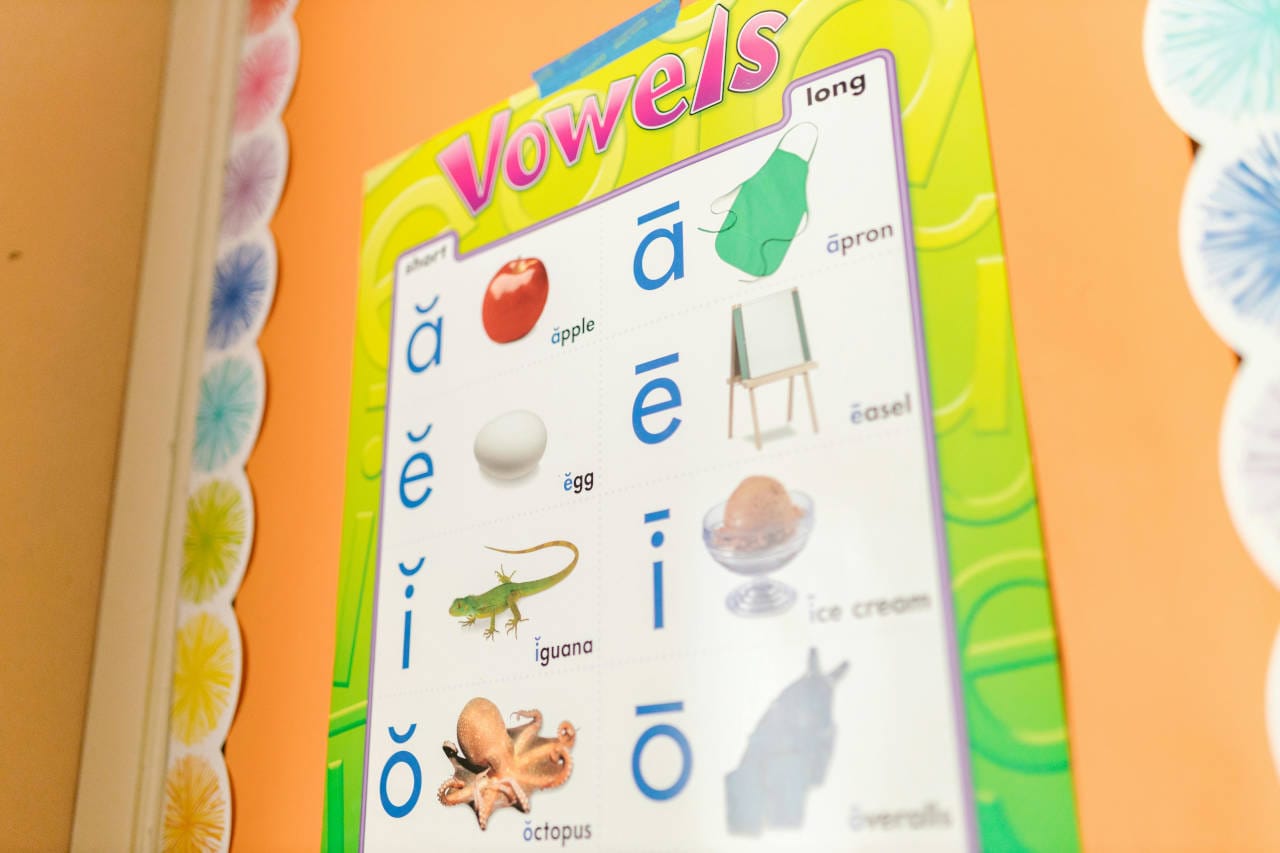
Common Challenges in Teaching CVC Words
While teaching CVC words can be rewarding, it also comes with challenges. Recognizing and addressing these common pitfalls ensures a more effective learning experience:
1. Overloading Children with Too Many Words
Children may feel overwhelmed when exposed to multiple word families or extensive word lists at once. This can lead to confusion and frustration, reducing motivation.
Example:
Introducing cat, cap, bat, rat, map, sap all at once may confuse beginners as the words sound similar.
Solution :
Focus on one word family at a time (e.g., only -at words).
Use spaced repetition to reinforce learning.
Integrate games like "Find the Word" for reinforcement.
2. Skipping the Blending Process
Skipping the essential steps of blending (combining sounds to form a word) and segmenting (breaking words into individual sounds) can create gaps in phonics understanding.
Example:
Jumping straight to reading the word dog without first practicing /d/ /o/ /g/.
Solution :
Start with phonemic awareness activities such as tapping or clapping for each sound in a word.
Use blending boards or apps to demonstrate how sounds combine.
Encourage repetition: Say the word, stretch the sounds, and blend again.
3. Using Confusing or Complex Examples
Starting with abstract or less tangible words can make it difficult for children to associate sounds with meaning.
Example:
Teaching the word bog before dog—the latter is easier to recognize due to familiarity with the object.
Solution :
Begin with commonly used and easily visualizable words (e.g., cat, sun).
Incorporate matching activities where children pair words with images.
For more creative teaching approaches, see 5 Creative Ways to Teach CVC Words at Home.
Tips for Mastering CVC Words
1. Establish Daily Practice Routines
Set aside a consistent time each day for reading practice. A simple routine might include:
Reading flashcards.
Playing a word-matching game.
Completing a worksheet.

2. Leverage Multisensory Techniques
Children learn best when they can see, hear, and touch. Examples include:
Visual: Use colorful flashcards or a digital phonics app.
Auditory: Encourage children to repeat words aloud, emphasizing individual sounds.
Tactile: Incorporate physical activities, such as forming letters with clay or tracing letters in sand.
3. Use Games and Fun Activities
Make learning enjoyable with interactive games:
CVC Bingo: Create bingo cards with CVC words; children mark them as they’re called out.
Hopscotch Words: Write letters in hopscotch squares. As children jump, they blend the letters into words.
Word Search: Provide a grid with hidden CVC words for children to find.
Here are two games available for download. Simply right-click and select "Save image as," or tap if you're on a phone:
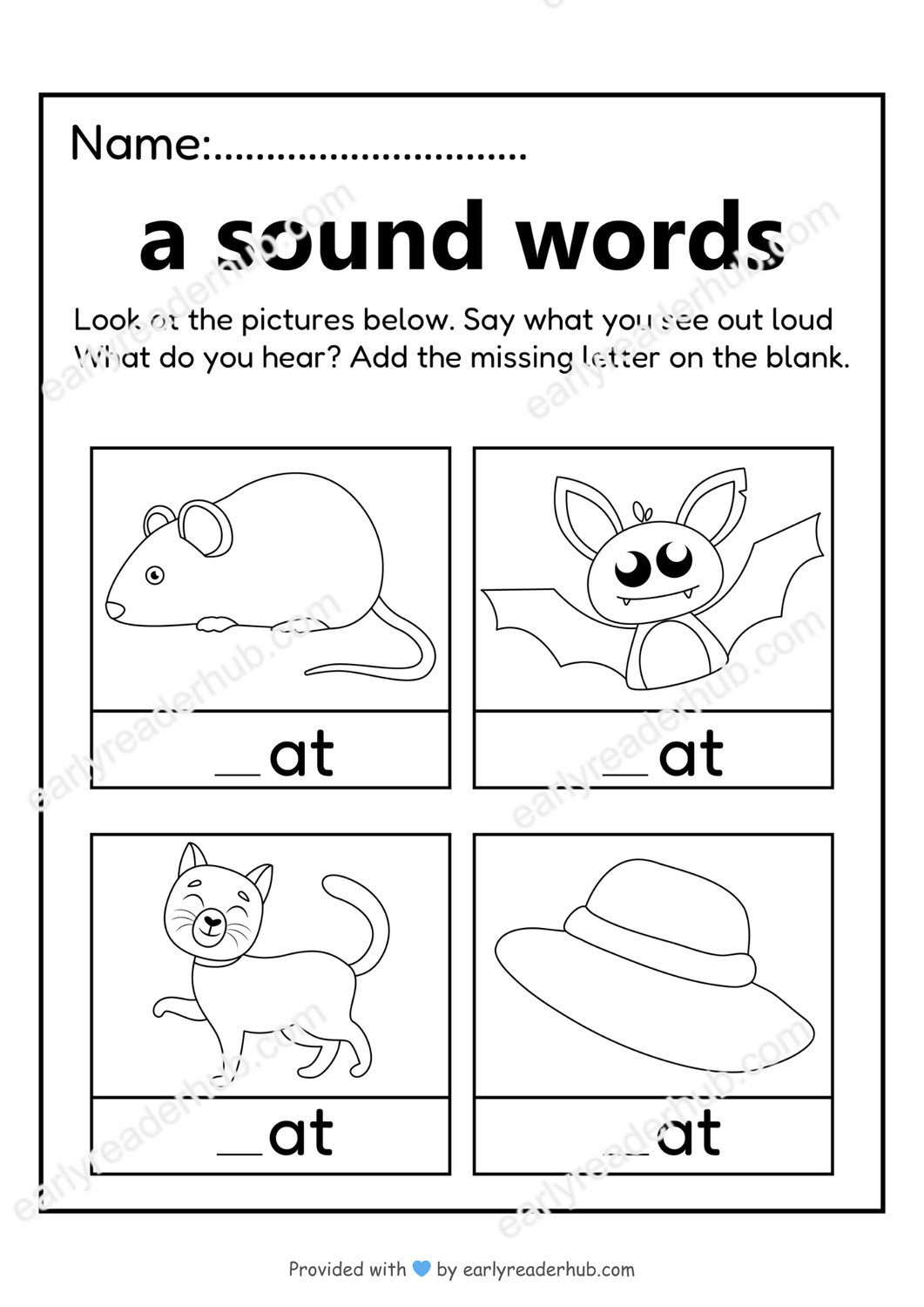
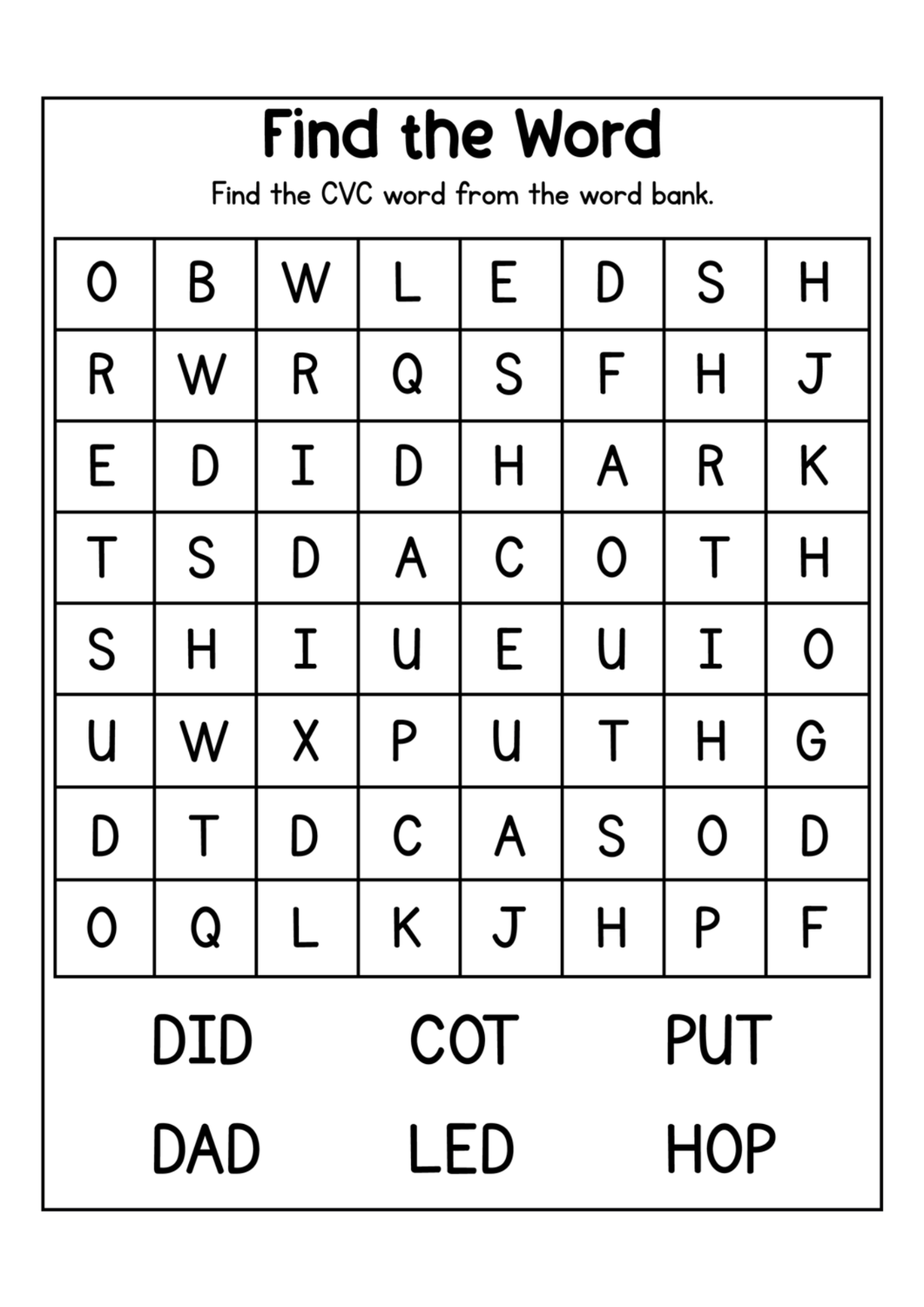
For more activities ideas, read 10 Simple CVC Word Activities for Early Readers.
4. Explore Thematic Groups
Group CVC words by theme to make them relatable. Examples:
Animals: cat, dog, rat.
Objects: hat, pen, mug.
Actions: run, hop, sit.
5. Read Aloud with Context
Encourage reading simple CVC-based books. For example, Bob Books Set 1: Beginning Readers introduces CVC words in context.
6. Printable Resources for Reinforcement
Tracing Worksheets: Help children learn to write CVC words while reinforcing letter-sound relationships.
Cut-and-Paste Activities: Enhance motor skills as children build words.
📌 For more structured learning, consider incorporating activities from curated resources like the Early Learning Kids Activity Bundles—a treasure trove of engaging and educational tools that simplify teaching while making it fun.
Advanced Techniques for Parents and Educators
Encourage Independent Word Building
Give children magnetic letters or alphabet blocks to form words independently. Ask them to create new words using a common ending, such as -at (e.g., bat, cat, hat).
Examples:
Start with cat. Ask them to swap the first letter to make bat, hat, or mat.
Use the word sun. Replace the vowel to form sin, son, or run.
Fun Insight:
You can gamify this activity by timing them. For instance, say: "How many new words can you build in 2 minutes?" Keep a scoreboard to motivate them further.
Pro Tip for Parents / Educators:
Tie this activity to daily life. For example, while cooking, give them letters and ask, “Can you make a word that rhymes with pot?”
Incorporate Technology
Use educational apps and online tools that combine learning with games. Platforms like , ABCmouse and Reading Eggs are particularly effective at teaching phonics and CVC words.
Examples:
Starfall: Offers drag-and-drop exercises to form CVC words, reinforcing letter-sound relationships.
ABCmouse: Features songs and interactive books where kids can click on words to hear them pronounced.
Reading Eggs: Uses short, guided lessons with playful animations to keep kids engaged.
Fun Insight:
Children often see tech-based learning as “playtime” rather than “schoolwork.” You can let them “teach” you how the app works, reinforcing their confidence and understanding.
Pro Tip for Parents / Educators:
Pair screen time with hands-on activities. For instance, after completing an app-based word game, ask children to write down or draw the words they just learned.
Reinforce Learning Through Stories
Read books with repetitive CVC patterns and rhymes, such as "Hop on Pop" by Dr. Seuss or "Fox in Socks". Highlight CVC words as you read, encouraging children to spot and pronounce them.
Examples:
After reading Hop on Pop, ask: “Can you find another word that rhymes with hop?”
Use a blank notebook to let kids illustrate their own mini CVC story. For instance, a story about a cat and a bat could be paired with drawings.
Fun Insight:
Children love silly stories! Make up funny rhymes with CVC words:
“The dog met a hog on a log! What do you think they did?”
Pro Tip for Parents / Educators:
Turn storytime into a drama activity. Act out scenes from the book using puppets or props, emphasizing the pronunciation of each CVC word.
Resources and Tools
Printable Worksheets: Download free CVC word worksheets from Education.com or Twinkl.
Online Games: Platforms like PBS Kids offer phonics games that reinforce CVC learning.
Phonics Apps: Try ABCmouse or Teach Your Monster to Read for interactive learning.
Conclusion
CVC words are a cornerstone of early literacy, offering children the tools to decode, read, and spell effectively. By practicing regularly, engaging in multisensory activities, and using the tips outlined above, parents and educators can set young readers on the path to lifelong success. Whether through thematic games or printable resources, the journey to mastering CVC words can be fun, rewarding, and educational.
Discover More!
Ready to dive deeper into teaching CVC words? Start exploring practical, child-friendly tools with the Early Learning Kids Activity Bundles today—perfect for at-home learning or classroom use!
Copyright © Early Reader Hub 2026
All Rights Reserved
Copyright © Early Reader Hub 2025 All Rights Reserved